DMA-PRIME: Wastewater Sites, Targets, and Data Flow
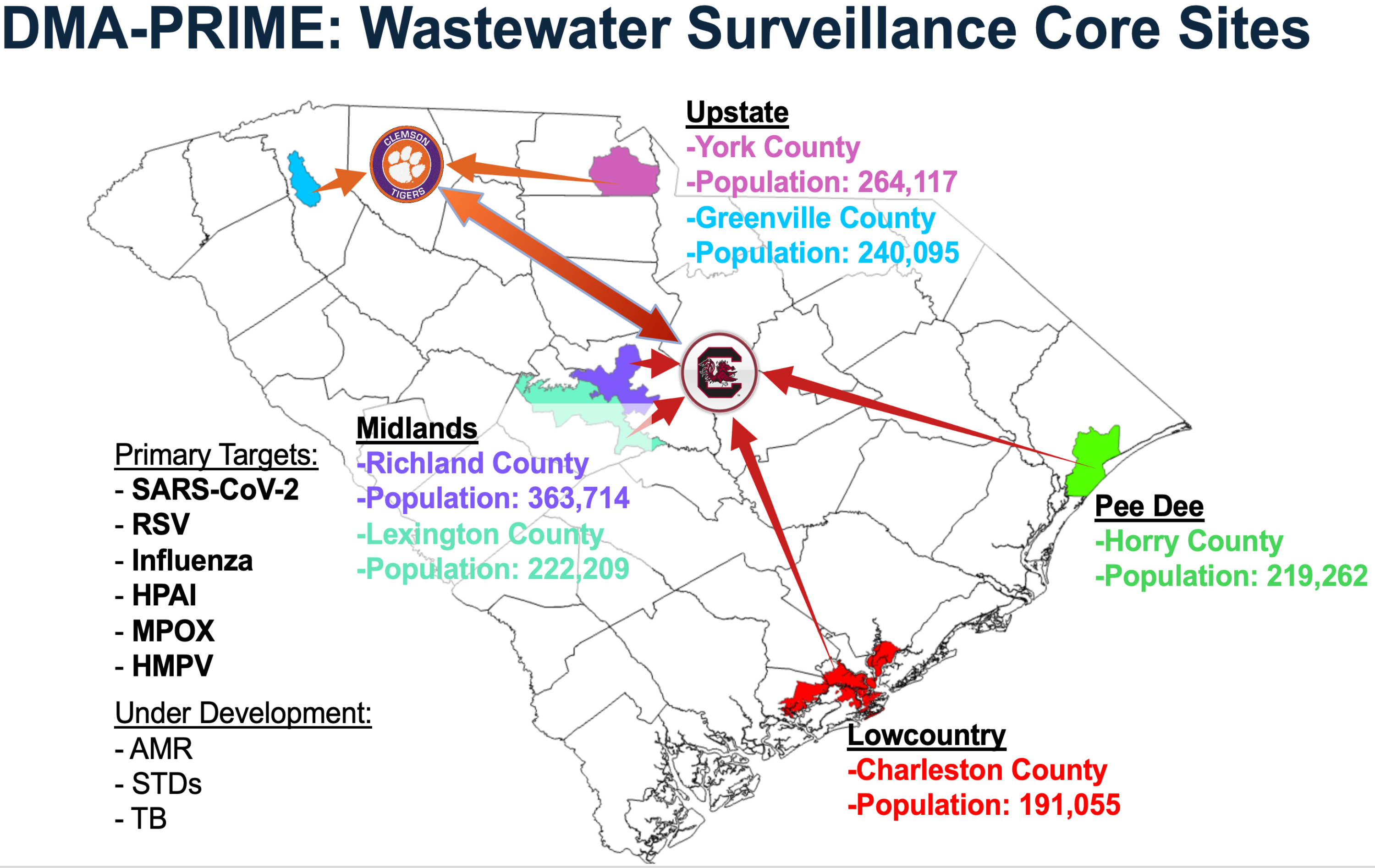
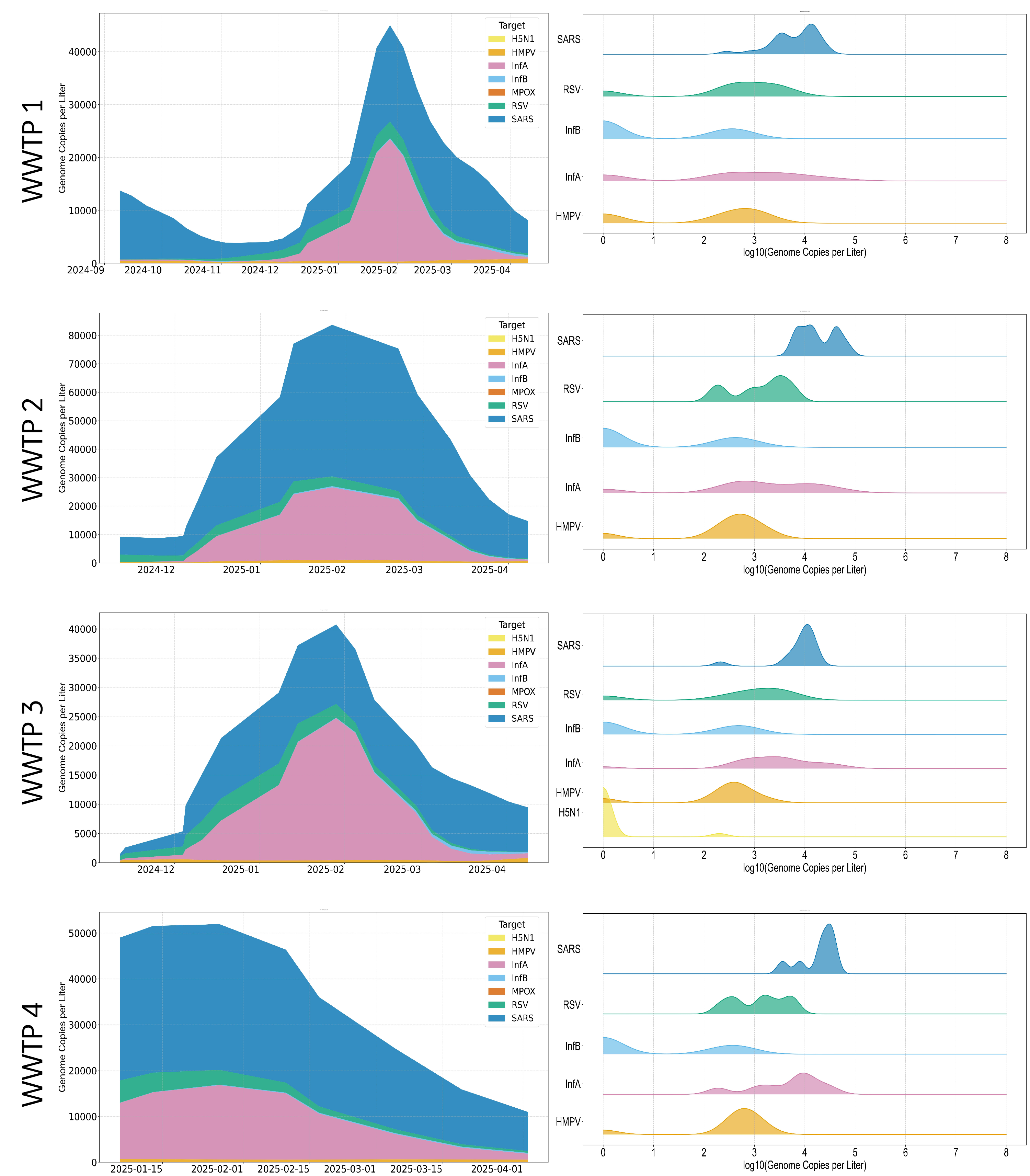
The DMA-PRIME center is funded through the CDC Center for Forecasting and Outbreak Analytics and aims to improve real-time infectious disease outbreak response by supporting always-on data collection, outbreak detection and forecasting mechanisms for swift integration into public health response. The lab uses wastewater surveillance to monitor microorganisms such as SARS-CoV-2 and antibiotic resistant bacteria from the building-level all the way to metropolitan areas across the U.S. This center and the wastewater core enhances and expands South Carolina’s infrastructure for detecting infectious agents that could impact public health. The wastewater core works closely with stakeholders and other researchers throughout the state to develop a wastewater surveillance network that engages in routine monitoring of community health and has the capacity to rapidly deploy in response to public health emergencies. The center has developed a comprehensive monitoring plan ranging from the community level to the building level for better spatial resolution of disease dynamics that can lead to more targeted intervention programs. By monitoring for respiratory viruses (e.g., SARS-CoV-2, influenza, RSV) and other priority infectious agents at various geographic locations, the wastewater surveillance team can help public health leaders and health care providers stay ahead of emerging threats in areas as small as a single apartment complex to the size of an entire region, such as the Lowcountry or Midlands. With all center cores feeding data back into the broader DMA-PRIME network, epidemiologists and data scientists integrate the information with other sources (e.g., electronic health records, social media data, rural mobile health records) to develop disease forecast models that can inform interventions and mitigation strategies. The overall goal is to develop a sustainable non-intrusive health surveillance network that is always operating behind the scenes to better protect the health of South Carolina citizens.