Influence of fire ash on Vibrio vulnificus
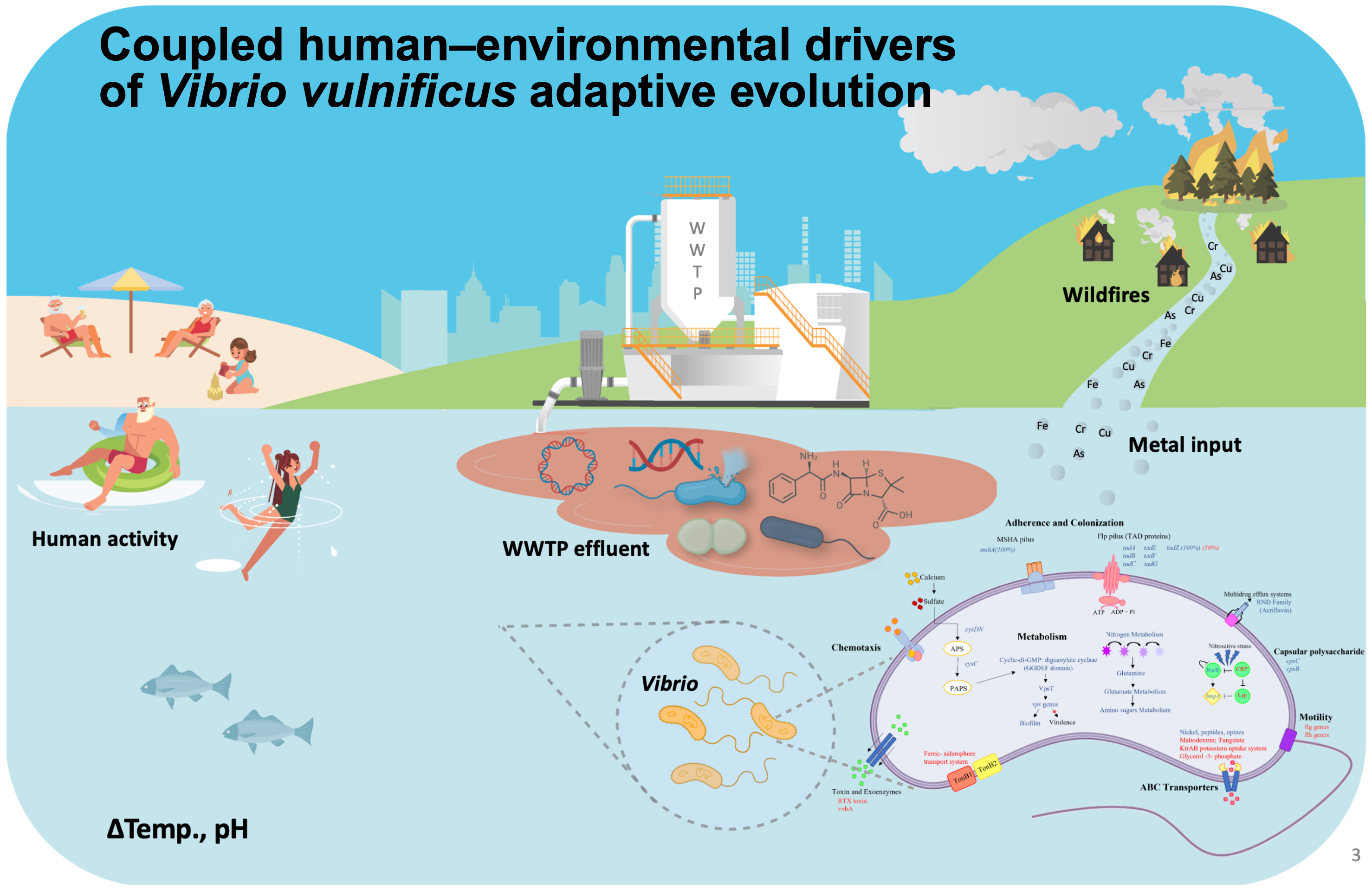
This study aimed to understand the potential effects of urban interface wildfire ashes on Vibrio vulnificus growth and gene expression using transcriptomic approaches. V. vulnificus was exposed to structural and vegetation ashes and analyzed to identify differentially expressed genes using the HTSeq-DESeq2 strategy. Exposure to wildfire ash altered V. vulnificus growth and gene expression, depending on the trace metal composition of the ash. The high Fe content of the vegetation ash enhanced bacterial growth, while the high Cu, As, and Cr content of the structural ash suppressed growth. Additionally, the overall pattern of upregulated genes and pathways suggests increased virulence potential due to the selection of metal- and antibiotic-resistant strains. Therefore, mixed fire ashes transported and deposited into coastal zones may lead to the selection of environmental reservoirs of Vibrio strains with enhanced antibiotic resistance profiles, increasing public health risk.
Influence of fire ashes on Vibrio vulnificus growth
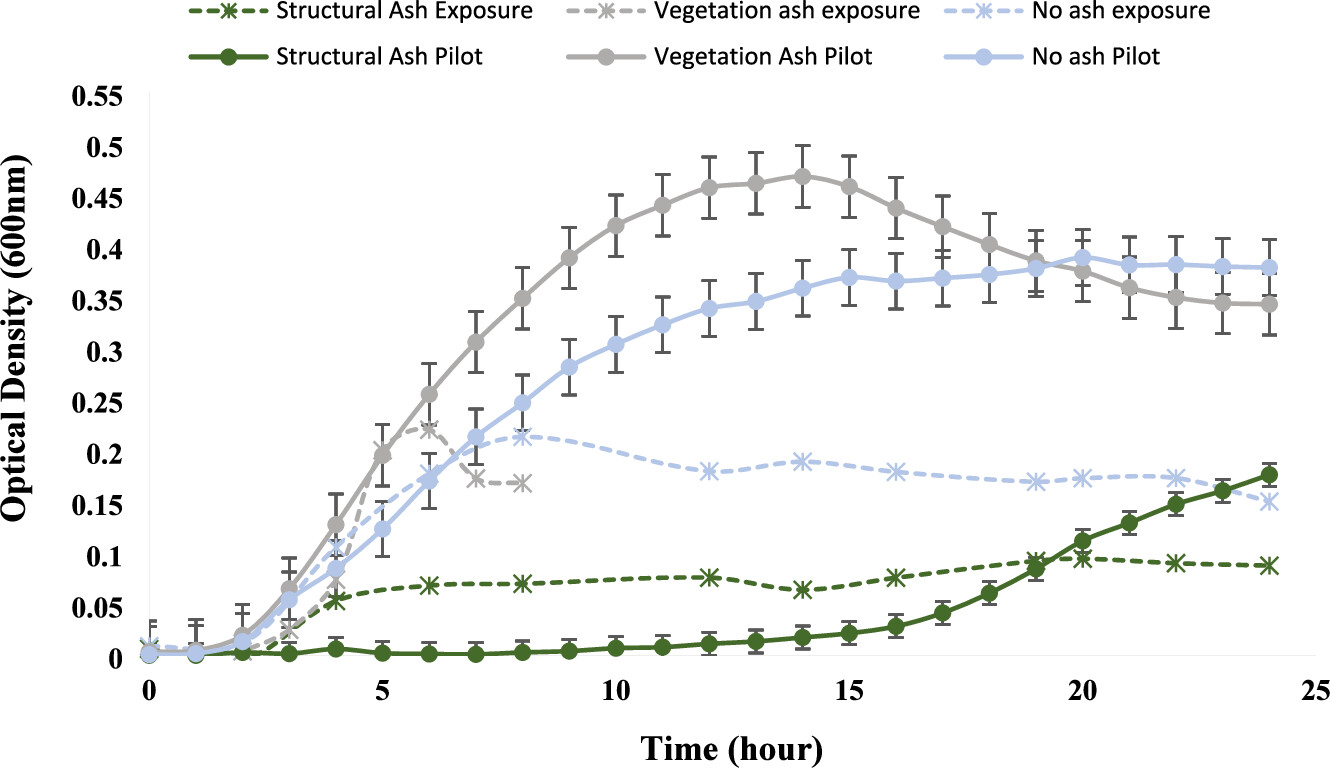
Bacterial growth of V. vulnificus ATCC 27562 in modified seawater yeast extract containing wildland-urban interface fire ashes. The exposure of V. vulnificus ATCC 27562 to two types of fire ashes showed enhanced bacterial growth in the vegetation ashes with a high iron content (gray lines) and suppressed growth in the structural ashes containing copper, arsenic, and chromium (green lines). The control condition, no ashes, is represented by the blue lines. The solid lines represent a pilot study where V. vulnificus was grown in experimental conditions in a 96-well plate for 24 h. The dashed lines represent the bacterial growth during the transcriptomic exposure study, where the optical density was measured every 2 h for the structural ash and hourly for the vegetation due to the difference in toxicity determined by the dose−response analysis.
Impact of fire ashes on Vibrio vulnificus gene expression
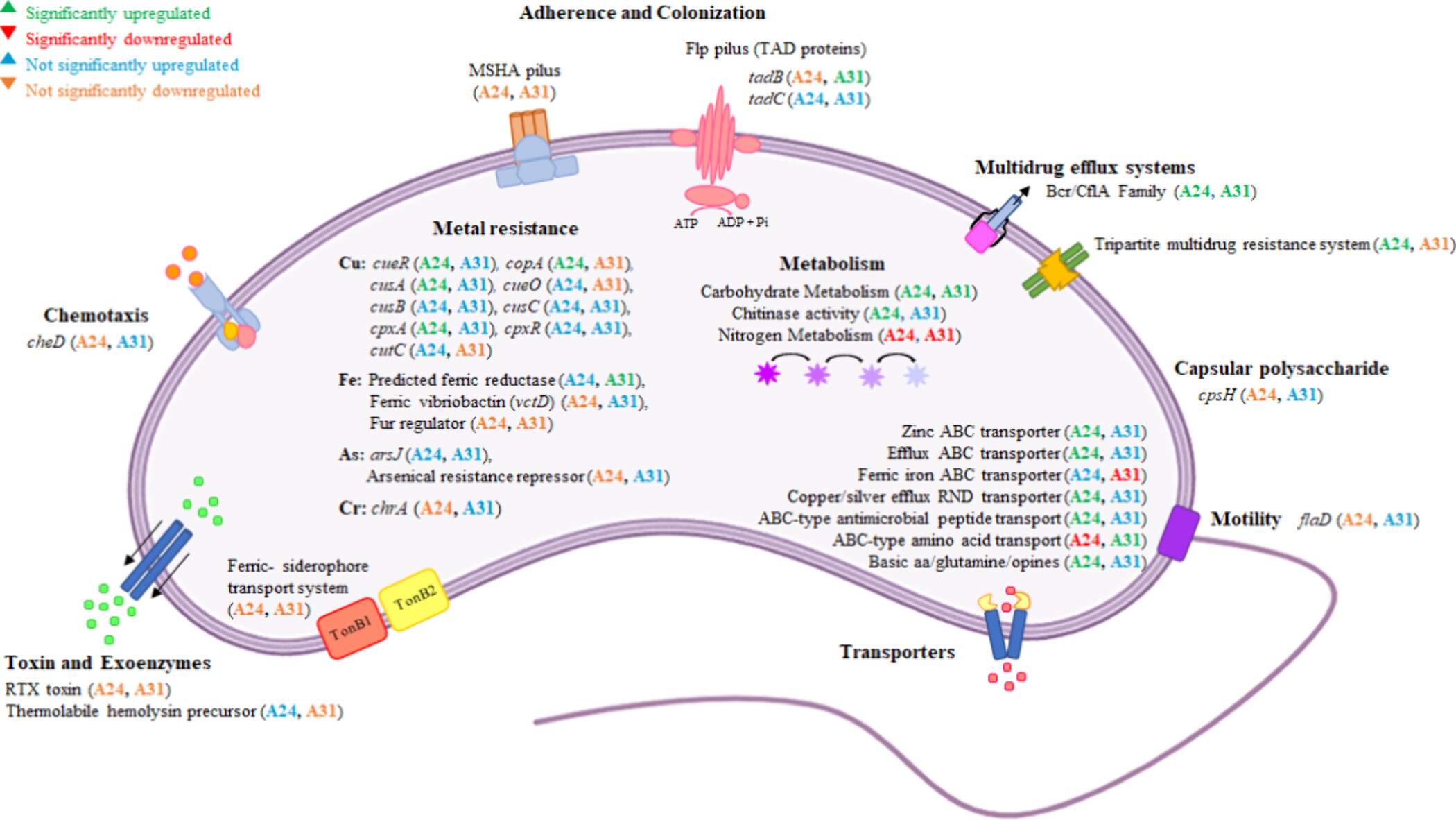
Conceptual model of altered Vibrio vulnificus gene expression or pathways as a response to wildland-urban interface fire ash (A24 structural ash and A31 vegetation ash). This conceptual model summarizes the notable V. vulnificus expressed genes in the bacterial response to the WUI fire ash exposures, as compared with the no-ash control. A24 represents the response to structural ash, and A31 represents the response to vegetation ash. The text color indicated if the gene or pathway was upregulated or downregulated on the basis of the no-ash control and if the expression was significantly different from the control. The green and red colors represent significantly upregulated and significantly downregulated genes, respectively. The blue and orange colors represent upregulated and downregulated genes that are not significantly different compared to the control, respectively.
Video: Water sampling at the UofSC Baruch Marine Field Laboratory
Norman Lab graduate students sampling water at the UofSC Baruch Marine Field Laboratory to isolate Vibrio vulnificus from the tidal waters.
Project Photos