Influence of wastewater effluent on Vibrio vulnificus
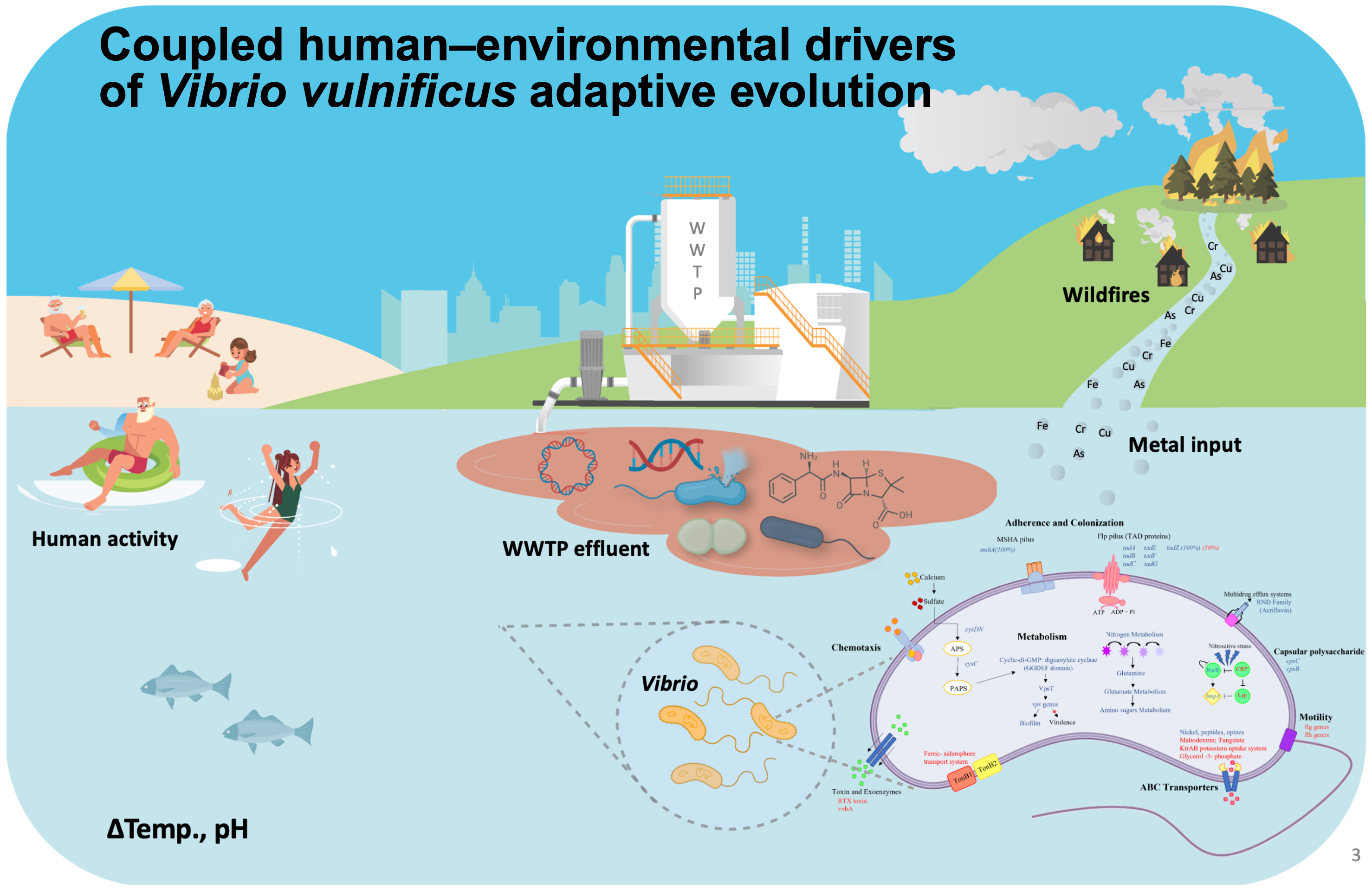
This study aimed to better understand the influence of treated sewage effluent on effluent-receiving microbial communities using Vibrio as a model of an opportunistic pathogen. Integrated transcriptomic approaches were used to analyze the changes in overall gene expression of V. vulnificus NBRC 15645 exposed to wastewater treatment plant (WWTP) effluent for a period of 6h using a modified seawater yeast extract media that contained 0, 50, and 100% filtered WWTP effluent. RNA-seq reads were mapped, annotated, and analyzed to identify differentially expressed genes using the Pathosystems Resource Integration Center analysis tool. The study revealed that V. vulnificus responds to wastewater effluent exposure by activating cyclic-di-GMP-influenced biofilm development. Also, genes involved in crucial functions, such as nitrogen metabolism and bacterial attachment, were upregulated depending on the presence of treated municipal sewage. This altered gene expression increased V. vulnificus growth and proliferation and enhanced genes and pathways involved in bacterial survival during the early stages of infection in a host.
Influence of wastewater effluent on Vibrio vulnificus gene expression
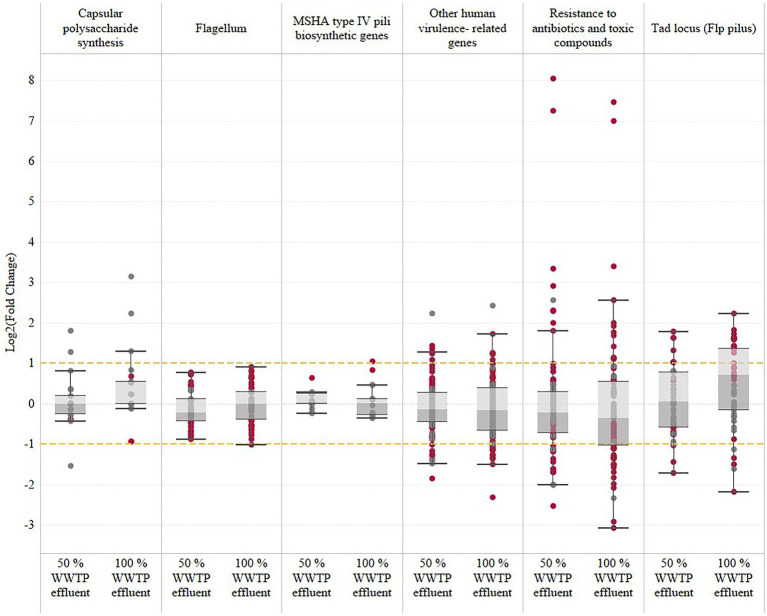
Vibrio vulnificus expression of human-virulence-related genes in response to wastewater effluent exposure. The human-virulence genes documented in this study and in previous studies have been identified and categorized into six subcategories based on the most relevant virulence factors: capsular polysaccharide synthesis, flagellum, MSHA type IV pili biosynthetic genes, resistance to antibiotics and toxic compounds, and other human-virulence-related genes. The significantly regulated genes (FDR-adjusted value of p≤0.05) are represented with garnet dots, and gray dots represent the non-significant genes.
Model of the effect of wastewater effluent on Vibrio vulnificus gene expression
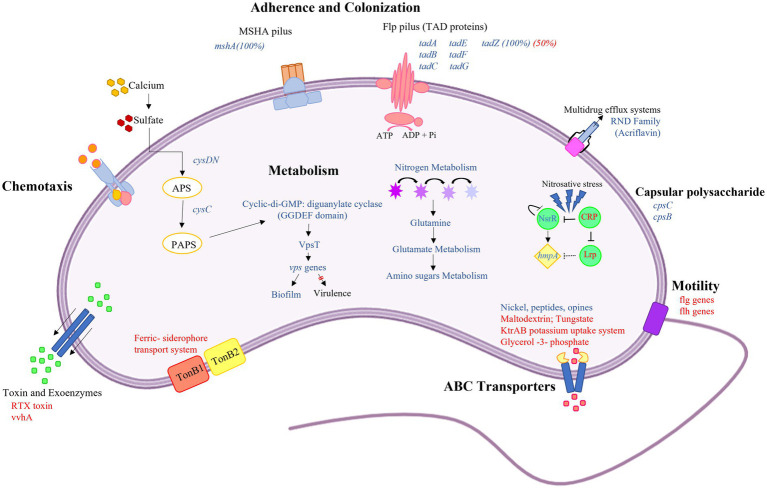
Graphical summary of altered Vibrio vulnificus gene expression or pathways with exposure to wastewater effluent. This graphic shows the differentially expressed genes (FDR-adjusted value of p≤0.05) in V. vulnificus exposed to wastewater effluent compared with the 0% wastewater control. The blue and red text represent upregulated and downregulated genes, respectively. Briefly, V. vulnificus exposed to effluent increased transcripts related to attachment and biofilm formation, including Flp pilus (tad genes) and MSHA pilus. This transition from planktonic to biofilm formation is driven by the action of diguanylate, which resulted in a high level of intracellular cyclic-di-GMP. This switch in growth state is further supported by the downregulation of flagellar genes (motility) and upregulation the sulfate assimilation genes cysDN and cysC by calcium as primary environmental signal. In addition, the genes associated with nitrogen metabolism are upregulated suggesting exposure to wastewater effluent alters bacterial metabolism. Increased transcripts for genes involved in substrate binding and transport systems, such as ATP-binding cassette (ABC) transporter and multidrug efflux systems, suggest increased potential for substrate translocation. Lastly, upregulation of the hmpA gene suggests that exposure to wastewater effluent acts as a source of nitrosative stress, possibly due to increased nitrogen metabolism.