Extreme weather and marine pathogens
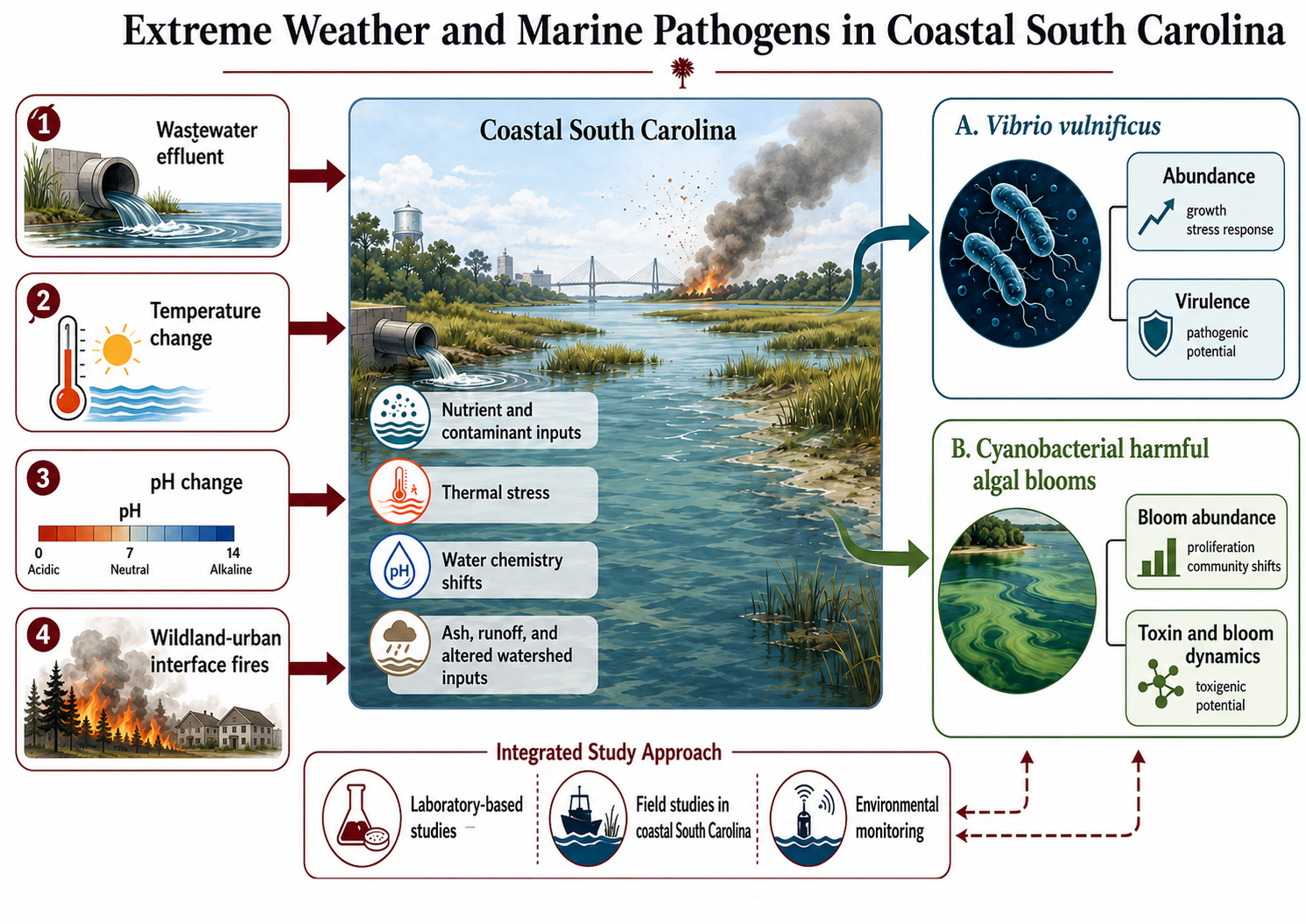
This concept diagram illustrates how extreme weather and coastal environmental change may influence marine pathogen dynamics in coastal ecosystems. The left side highlights four major environmental drivers—wastewater effluent, temperature change, pH change, and wildland–urban interface fires—that can alter estuarine and coastal water quality through nutrient enrichment, contaminant inputs, thermal stress, shifts in carbonate chemistry, ash deposition, and stormwater or watershed runoff. These changing conditions may create environmental settings that favor the persistence, growth, and virulence potential of Vibrio vulnificus, a naturally occurring bacterial pathogen of warm coastal waters. The diagram also shows how these same stressors may contribute to cyanobacterial harmful algal bloom development by influencing bloom abundance, microbial community composition, toxin-related dynamics, and ecological stability. By integrating controlled laboratory experiments with field studies and environmental monitoring in coastal South Carolina, this research examines how multiple climate- and disturbance-related pressures interact to shape microbial hazards. Together, these approaches provide insight into how changing coastal conditions may affect ecosystem health, water quality, and potential risks to human health.