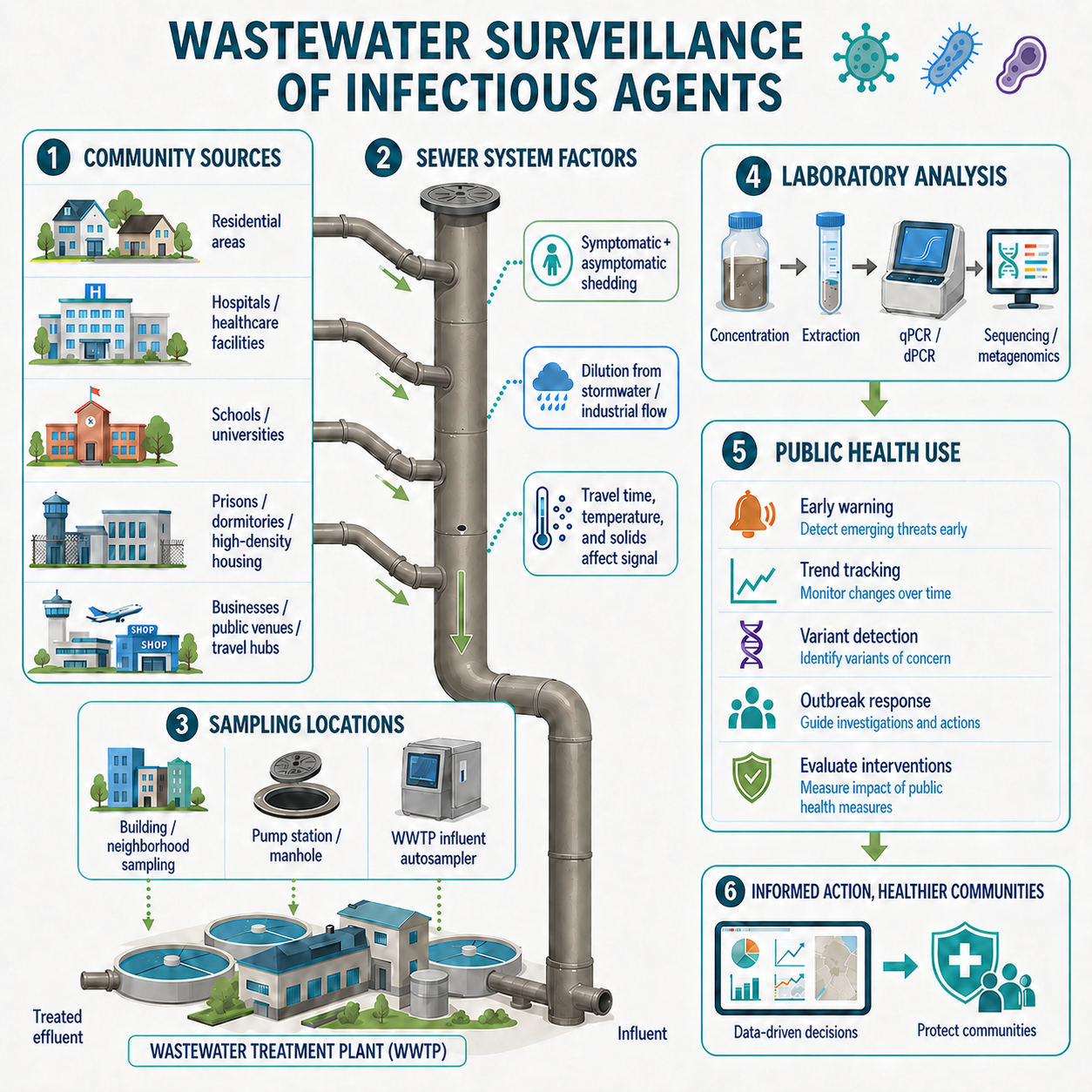
Wastewater Surveillance Processs
Wastewater-based epidemiological surveillance provides a community-level tool for monitoring infectious agents shed into the sewer system by both symptomatic and asymptomatic individuals. Because wastewater combines inputs from residential areas, healthcare facilities, schools, workplaces, travel hubs, and other community settings, it can provide an integrated picture of infection trends across a defined catchment population.
As wastewater moves through the sewer network, the signal can be influenced by factors such as stormwater dilution, industrial flow, travel time, temperature, and solids content. Samples may be collected at different scales, including buildings, neighborhoods, pump stations, manholes, or wastewater treatment plant influent, depending on the surveillance question.
In the laboratory, samples are concentrated and analyzed using molecular methods such as qPCR, digital PCR, sequencing, or metagenomics. These data can support early warning, trend tracking, variant detection, outbreak response, and evaluation of public health interventions.
Overall, wastewater surveillance connects environmental sampling, laboratory analysis, and public health action to help detect infectious disease threats and protect communities.